
In 1948 approximately 70% of the population was ordinary working class. An extraordinary transformation in their lives was brought about by the creation of the National Health Service on 5th July in that year. No one now under the age of 70 will have any idea of what a social revolution this turned out to be. I was 10 years old then. My parents had three children under the age of 11, including my 7 years old sister Maureen and a year old baby, my sister Sally. It is notoriously difficult to estimate and compare real wages and salaries in the 1930s and 1940s, but my farm labourer father’s wages scarcely moved much between 1930 and the year of my birth in 1937, and by 1948 still represented only two thirds of the average working man’s wage. An authoritative history of the period judges that “labourer’s rates… were equivalent to dire poverty”. (Branson and Heinemann,1973). Most of these meagre earnings went on food, clothing and heating, leaving little for other needs such as health care.
What were these needs? The British population’s health had improved significantly in the first half of the twentieth century: my own life expectancy as a boy born in 1937 was about 60 years, but would have been only 45 years in 1900. Yet many children still died from diseases such as diphtheria and whooping cough, and even a decade later there was substantial incidence of tuberculosis. Health care provision was, writes a respected commentator on the 1930s, a thing of “hotchpotch availability, lack of funding, and reluctance to extend state involvement, all resulting in inequality of access to medical services” (Gardiner, 2011). Basic health insurance schemes, introduced in 1913, in the 1930s only covered some 40 per cent of the working population, and (crucially) did not cover dependent wives and children. Put bluntly, none of my family could afford to be sick, and we children bore the brunt of our mother’s enthusiastic reliance on a mix of old wives’ tales and the belief that we should just get on with whatever ailed us until it went away. This sort of thing didn’t work too well with then still prevalent tuberculosis, or with physical injury, twice occasioned in my case by stabbing a garden fork straight through my foot, and later when I was knocked off my bike by a lorry on our local bit of The Great North Road. Dad would then have to ride two miles on his bicycle to persuade a reluctant and somewhat patrician local doctor to leave his horse riding or cricket to come and attend to me. Paying for these visits meant hours of extra back-breaking overtime in the fields for Dad.
My parents were strong Labour supporters and were ecstatic about the unexpected Labour election victory in 1945 over the national war hero, Winston Churchill. Their faith was justified by the ensuing changes in social welfare that were so significant for poor families like mine. None mattered more to them than the introduction of family allowances, which at a stroke gave a much needed boost to their sparse income, an extra 10 shillings to add to Dad’s meagre weekly wage. But a close second was the arrival in 1948 of those free health services. Compared with today, the system was pretty straightforward: health services were comprehensive, covering everything from eyes and teeth to the most serious diseases or operations; they were universal, available to everyone, of whatever social rank; and they were free at the point of delivery, regardless of income, however expensive the treatment, and covering both hospitals and local doctoring services (this principle of free access to healthcare for all was, interestingly, confirmed by Conservative Prime Minister Margaret Thatcher some 40 years later).
These reforms did not come without a fight, waged principally between Aneurin (Nye) Bevan, my parents’ favourite political hero, and the medical profession, represented largely by the British Medical Association (the BMA). Bevan, a tough and shrewd political operator, overcame the organised resistance of this essentially middle class profession who were resistant to the notion of working as salaried servants of the state. He did so by taking advantage of divisions within the medical profession, and at the cost of conceding that hospital consultants could incorporate some private practice, well remunerated, into hospital arrangements, later to be regarded as the ‘trojan horse’ that permitted undue levels of privatisation in the health service. The Times commented at one point that “the dispute had been allowed to drag on as though it were a private wrangle between the Minister of Health and a score of elderly doctors”. Bevan had stronger words for them, “a small body of politically poisoned people” who were engaged in “a squalid political conspiracy”. A more disinterested judgement noted that “the doctors were, after all, the first middle class and predominantly Conservative interest group to offer concerted resistance to the [Labour] Government” (Jenkins, 1964).
Bevan’s determined embrace of this major reform was driven by his own bitter personal experience, his coal-miner father dying in his arms from pneumoconiosis, a dreaded pit disease, and more generally by his experience of the privations of long term unemployment in the Welsh mining valleys. My mother would never have described the Tories, as Bevan did, as “lower than vermin” but she knew well enough that the coal owners were the unyielding enemy of people like her own mining family and community in the North East and cared little about the dangerous working conditions of the miners they employed and profited from, or about the illnesses and diseases that came with the appalling housing and public health conditions that ravaged such communities.
In any case, political triumph had put the shoe on the other foot for the first time in centuries, and it was not easy for Conservative politicians and their supporters to resist the logic of 1945. Not least, these welfare reforms had been brewing for some time, underpinned by the Beveridge Report of 1942, which famously sought to get rid of the Five Giants needed to be overcome for Britain’s recovery, identified in capital letters as WANT, DISEASE, IGNORANCE, SQUALOR AND ILLNESS. (I’m somewhat disinclined to have political heroes, but Beveridge would have been one of mine). His message was that welfare reforms were needed to support national economic and social recovery, and should deliver policies that addressed poverty, income support, educational inequalities, housing needs, and health provision. The public reception of this Report was generally favourable, and it might be said that Labour’s political victory pushed at Beveridge’s open door to the creation of the welfare state. Jenkins suggests (without giving a source for the calculation) that “the whole range of services made freely available cost the equivalent of an all-round wage increase of about £2.15 shillings a week”.
The National Health Service was the centrepiece of these welfare reforms, and the response swift. Within a year, 41m people (95% of the eligible people) were covered by it. In that first year, 8.5 m dental patients were treated, and 5.25 m spectacles were dispensed. In the same year 187m. prescriptions were issued by 18,000 general practitioners. The NHS became the second largest institution in the country, second only to the armed forces. It was here to stay, and for many decades would hold a place of unusually high public esteem for a state institution. But in the last part of the twentieth century and into the present day, it would become a political battleground, fought with increasing acrimony. I’ll examine this in a second part to this blogpost. For now, I want to show what this most gargantuan and most revered of our public service institutions has looked like to one person in practice over the years, in keeping with the principle followed in my family memoir to use personal stories to support and illuminate general social and political contexts. (See Shifting Classes in Twentieth Century Britain: From Village Street To Downing Street.)
The NHS at Work: Flying High in Herefordshire

For the past two decades I have lived with my wife Sarah up a steepish hill above the Welsh border town of Knighton, a place where you can actually stand with one foot in England, and the other in Wales. Sarah planned, designed and managed the building of a delightful environmentally friendly house, mostly of wooden construction (see photo). We pretty much lived ‘on site’ for long periods, and at one point moved into the upper floor of the half-completed building, our sleeping accommodation reached by a single ladder. Early one Sunday morning I went to climb down the ladder. The ladder suddenly began to slip away from underneath me, and I was flung backwards, landing on my head and shoulders onto the hard concrete floor some 12 feet below. I lay there half conscious, head bleeding, utterly unable to move, this the first act in a protracted drama of which I have only the haziest recollection. Sarah can’t even remember how she managed to get down to the floor without a ladder but somehow managed to summon assistance. This came in two forms, first a local ambulance , but more dramatically a Welsh Air Ambulance helicopter, which swooped from the sky into the field next to us. It would be my one and only helicopter flight and I never saw a thing…
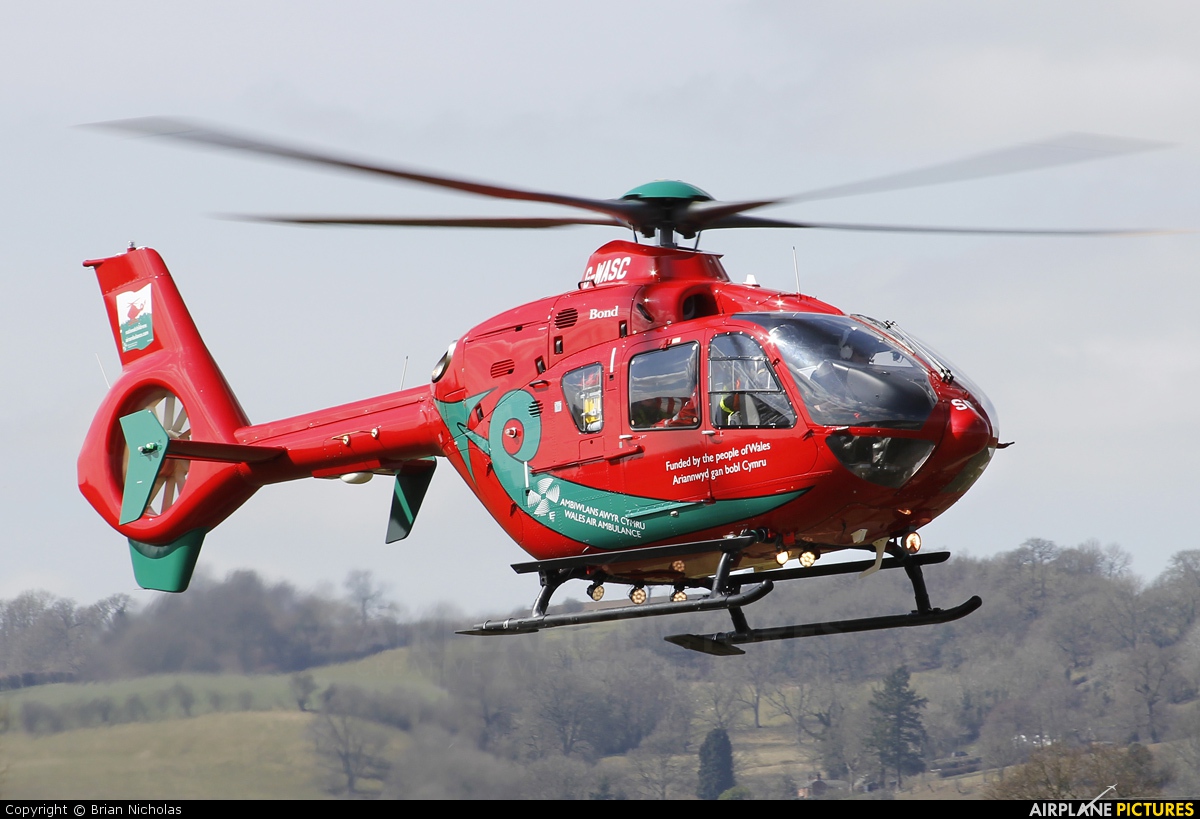
Since a broken neck or back was suspected, I was strapped into a head brace, and flown (in a matter of minutes) to Hereford Hospital: here I was met on their landing pad by a consultant surgeon hauled away from his Sunday morning breakfast. Satisfied after x-rays that nothing was broken, just rather badly battered, he consigned me to more junior hands and made off. I never saw him again. I was given a serious number of painkillers which rendered me more or less comatose for a few days. When I came to enough to survey my new surroundings, I found myself in a bed in a single room, cut off from the rest of the orthopaedic ward. I was propped up in sitting position, scarcely able to move, my neck still encased. Since I rarely slept much at night, I was at least entertained by a series of noises off, many being calls from patients who wanted a nurse to attend them. Many of these calls were disregarded, which shocked me at first, not least because in these initial 72 hours a nurse inspected me regularly, presumably in case I deteriorated in some way. I was by this time a no-neck monster, my neck and upper vertebrae swollen into a sort of flabby football. The friendly nurse reassured me that “it’s always like this at night, if people can’t sleep they think they need constant attention, a bit like overgrown children, best left to get on with it”. I saw the sense of this, but was a bit perturbed by some poor chap who was clearly feeling in despair, and cried out regularly for divine assistance. Getting no answer, it seemed, he would shout quite loudly and repeatedly: “Where’s God when you need him?’ Reply came there none, not even from the nursing staff.
A different diversion was provided by an elderly lady who had recovered from some kind of operation. Because she was also suffering from dementia, and normally lived alone, she often wondered out loud what all these people were doing in her home? She regularly invaded the nurses’ cubby hole where they could relax a bit, crying ‘Get out of my kitchen you hussies!’ The nurses were remarkably kind and tolerant of her, knowing that her mental affliction was as great as any physical problem she had; she could not return home as a suitable social care package was unable to be accessed. She would be known, statistically, as a ‘bed-blocker’. She occasionally looked in on me to pinch my morning toast, left at the bedside by the harassed staff, but well beyond my reach.
What struck me most about this spell in hospital was how many different people would have to deal with you in some way, each trying to solve some problem you presented for them. At the top of this food chain, I would occasionally see two house doctors, one Dutch, the other a Nigerian, attached in some sort of training role. Both were friendly and reassuring, mostly concerned to monitor my pain management medications. My main problem here was that I had been installed in a specialist bed, meant to be ‘smart’ enough to adapt to different positions in which I had to be held at different times. Unhappily, a crucial bit of the smart mechanism seemed not to be working, which meant that I was in considerable discomfort at times, especially at night. The first attempt at a remedy came in the form of a technician, who poked around in the bed’s electronic entrails, then surfaced to tell me the good news: a crucial new part would solve the problem. Lugubriously, he followed with the bad news: it was not available in the hospital and unlikely to be obtained for several weeks. My saviour at this point was the senior nurse in the department, who said that what I needed was a new bed. She disappeared, to return red-faced but smiling broadly, and wheeling another smart bed: “It was just lying around in General Surgery” she said “and nobody seemed to be using it, so I’m swapping it for yours”.
This was typical of the nursing staff, harassed but determinedly ‘can-do’ when faced with problems, cheerful and attentive despite the myriad claims on their time and skills. I can only record one instance where this was not the case. As the doctors encouraged me towards some sort of mobility I could walk gingerly to the toilets in case of need, but I had to be helped out of bed, and back in again. The procedure was for me to ring a bell for the duty nurse. Normally all would be fine, but on this occasion, the rather pursed-lipped nurse who answered the call made no move towards me. I explained that because of my injuries I needed to be helped out. The lips pursed even harder: “Well, I can’t do that for you,” she said triumphantly “I have a bad back”. But this was the exception that proved the rule, and I have nothing but praise and gratitude for the care and kindness I constantly saw on display in this Herefordshire hospital at this time. When I limped out after three weeks, supported by the two East European physiotherapists who had been devoted each day to helping me to find my own, rather unsteady feet again, I felt that the whole place had seen me through an unexpected crisis and had helped me to face the world again.
The NHS At Work: Coming Down to Earth Again in Manchester
Since my home then was in Manchester, I was returned there to continue my treatment. By chance, the first hospital that could give me a consultation was Trafford Hospital, the very place where Nye Bevan had formally launched the NHS in 1948 (though then designated as Park Hospital, Davyhulme: see photograph at beginning of blog). Like Hereford, it was showing its age, with many buildings in need of repair or replacement. They were not too keen on this cuckoo thrust into their nest from a distant hospital, and I was glad when I could be returned to the care of my own local hospital, South Manchester University Hospital, regarded as a leading NHS institution. As a result of my neck and head injuries, I had been experiencing spells of dizziness and poor balance, which could have had a range of physiological and neurological causes. They had just the place to deal with this: the Department of Elderly Medicine, a title that still makes me smile, but left me a little miffed, too, seeing myself as a fairly fit and youthful person who just happened to have fallen on his head. This perception appeared to be shared by the assembly of patients in the consultant’s waiting room, all quite manifestly halt, lame and aged. As I strode purposefully and vigorously from the consultant’s office, the resentful expressions of those waiting their turn clearly showed their disbelief: how could I possibly have need of Elderly Medicine?
What followed for me was an intriguing journey through several medical departments and units, even other hospitals, as they sought to determine what my problem was. The first port of call was the Neurology Department, who organised a brain scan (when I asked if I should worry about drinking alcohol, a rather lofty consultant advised me to Consider My Habit, something which I have been doing ever since). A second consultant, seeking I think to impress a visiting Chinese surgeon who was sitting in, lectured me on Occam’s Razor, implying that where there could well be several causes of my condition it would be best to assume it could be any of them, and take no further action. My next visit was to the Professor of Rheumatology, clearly highly qualified as to his specialism, but with a rather idiosyncratic pronunciation of English. He wished to examine my fingernails, and was clearly excited by what he saw. “Look,” he enjoined me “Cirrhosis!” I was horrified; clearly I had not sufficiently Considered my Habit, and it was coming back to bite me. Bemused, I asked how he could tell? As he talked, I suddenly realised it was the pronunciation at issue here, not my liver: “Ah! You mean PSORIASIS”. “Yes! Yes!” cried the Professor enthusiastically “Cirrhosis!” We parted on extremely amicable terms of mutual misunderstanding.
Next up was the Heart Department. First I had to undertake a series of very energetic running and walking tests, attached to several machines and gadgets. Then I had what would be my most memorable experience, when my heart was examined through a sort of superior X-ray instrument which meant that I could see the resulting pictures of my own heart, pulsing and beating. I was fascinated and I could hardly tear my eyes away. I was assured that my heart was in excellent shape, and indeed I could see and hear that for myself: a spell-binding moment.
A further compliment followed when I was sent to the Salford Royal Hospital to see a specialist who would run the rule over a batch of x-rays of my neck, spine and pelvis. He was brimming with enthusiasm: “Look! You have an absolutely perfect pelvic girdle!”; well, yes, doctor, but why is it hurting?
This extended journey through most of the pathways of ‘elderly medicine’ left me feeling better about myself but not really much the wiser as to the prognosis for my condition. The Elderly Medicine consultant, a spry 50 or so, walked five miles to the hospital to keep my (and other appointments) when roads and transport were blocked by heavy snowfalls. Cheerfully rosy-cheeked he told me “the body has a long memory”, and he could see no reason why mine should not simply, in the long run, remember again how to walk and balance properly. And indeed it did, over the next decade, a period over which I permanently avoided ladders, as well as carefully Considering My Habit.
I could add many more stories of this kind, as the NHS sought to keep its explicit 1948 promise to see me through from the cradle to the grave. I have had successful operations on both knees, on a malfunctioning eye, effective hospital treatments for food poisoning, problems with my bowel, and twice for broken bones. A succession of general practitioners, unrestricted by horse riding or cricket, have shepherded me through a host of the usual minor ailments. Hospital emergency departments have set the broken noses of two sporting sons. At various times I have taken a lot of pills. In the last two years I have been protected by vaccinations from the appallingly dangerous Covid19 pandemic. The great majority of British adults will have had similar experiences. I feel strongly, then, that over my and many other people’s lifetimes the promises of 1948 have in many ways been honoured, but are increasingly under threat, as my next post will argue.
The NHS: Back To The Future
A lot of political water has passed under the health service bridges since 1948. Often this was because governments have consistently wrestled with the ever-rising costs of keeping those 1948 promises: this caused a convulsion in the Labour Government of 1950-51, when Nye Bevan himself resigned over the move to impose charges for what had been until then free spectacles and dental treatment (accompanied by Denis Healey and Harold Wilson). Bevan unsuccessfully resisted the breach of his prized principle of an entirely free service. But in 1951 the costs of the NHS were already around three times the initial estimate in 1946 (Peden,1985). The battle to balance rising provision with scarce resources has scarred the political landscape ever since. This landscape has been shaped by political ideology too, as Conservative administrations have sought relentlessly to overturn the post war welfare contract between state and citizen. I’d need to write a book to deal with this properly and many people have done so. I’ll use some of these commentaries in Part 2 of this blog to attempt to answer the question: Why Is The NHS a Political Football and Who Is Winning?
Sources of Information

Gardiner, J. The Thirties: An Intimate History (Harper Press, 2011 edition)
Glennerster, H. British Social Policy Since 1945 (Blackwell, 1995)
Hennessy, P. Never Again: Britain 1945-51 (Jonathan Cape, 1992)
Hennessy, P. Having It So Good: Britain in The 1950s (Penguin, 2007 edition)
Jenkins, P. 'Bevan's Fight With the BMA' in Sissons, M. And French, P. Eds., Age of Austerity 1945-51 (Penguin, 1964 edition)
Minogue M, Shifting Classes in Twentieth Century Britain: From Village Street to Downing Street (YouCaxton Publications 2020 see www.youcaxton.co.uk)
Morgan, K.O. Labour in Power,1945-51 (Oxford University Press, 1985 edition)
Peden, G.C. British Economic and Social Policy: Lloyd George to Margaret Thatcher (Philip Allan, 1985)
Pugh, M. 'We Danced All Night': a Social History of Britain Between The Wars, chapter 3 on 'Health and Medicine' (Vintage Books, 2009)
1 Comment